
Put a nature-positive economy into play.
Choose from twelve economic and financial models or six place-based games. Each card states the frontier economics you will experience.
Can economics solve the challenge?
Choose from twelve institutional and financial models. Each card names the condition you move, the result you observe, and the theory behind it.
 Game 01Rich editionLand & waterWatershed restoration & water securityTransferable across regions
Choose a 20-year restoration plan for a watershed where declining upstream forests threaten downstream water quality and drought security. Protect the ecological floor first, then judge which option limits regret across several futures while keeping local participants involved.
8 decisions · about 15 min · richHold the ecological floor fixed and choose the lower-regret option across conflicting futures.
 Game 02Quick decisionLand & waterRegenerative agriculture & pollinationTransferable across regions
On farmland where pollinator loss is destabilising yields and farm income, choose a mix of flower corridors, pesticide management, and income support. Learn to keep nature, production, and livelihoods distinct while making continued farmer participation possible.
3 scenes · about 4–6 min · storyKeep pollinators, yield, and income distinct while making farmer participation incentive-compatible.
 Game 03Quick decisionBlue & greenCoastal restoration & blue carbonTransferable across regions
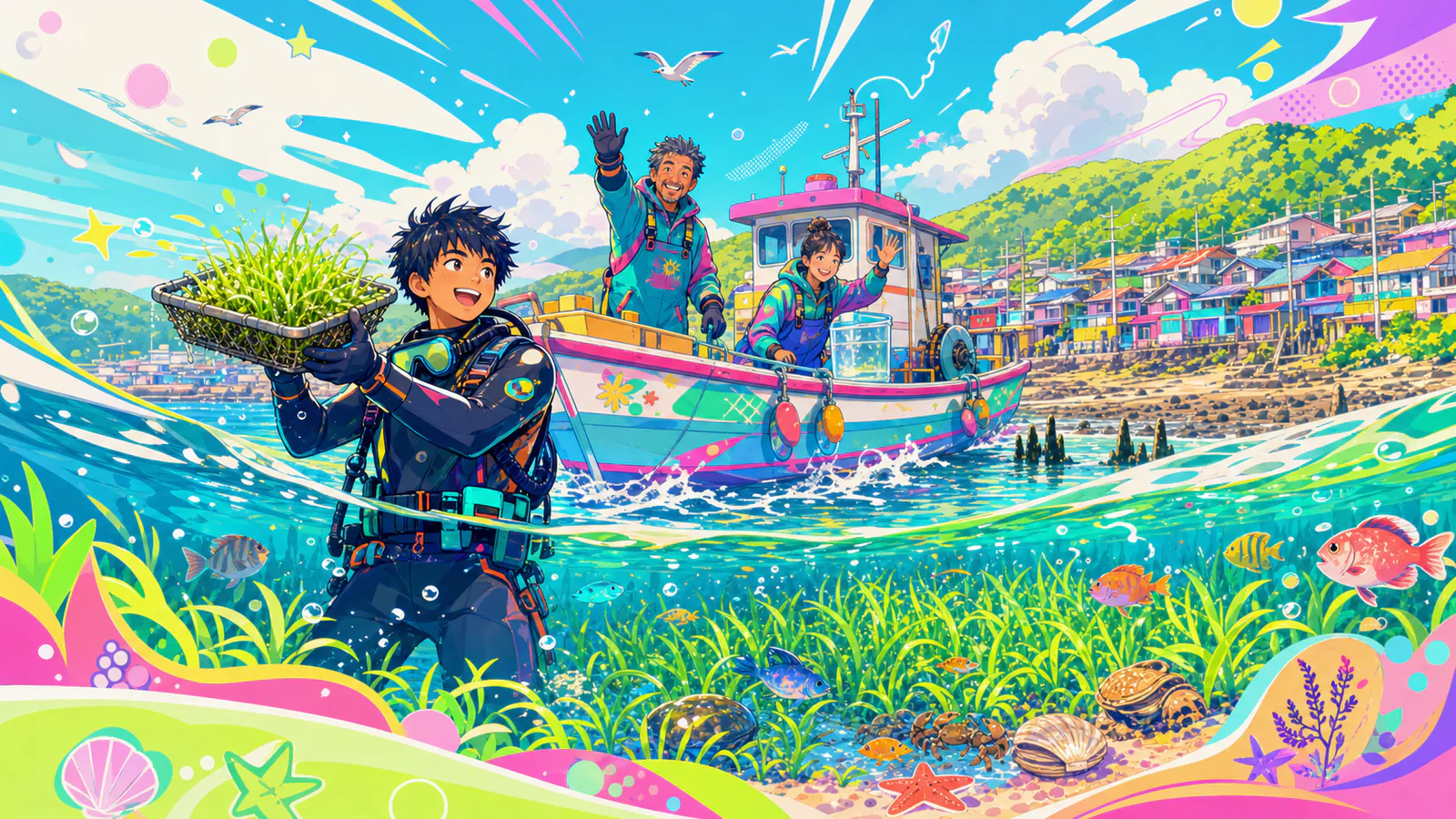
Seagrass and tidal flats recover slowly, while fishing livelihoods and storm protection cannot wait. Choose restoration sites and payment timing in stages, share costs with distant beneficiaries, and learn how to build a contract that can be revised after setbacks.
3 scenes · about 4–6 min · storyConnect delayed coastal recovery and distant beneficiaries through staged payments.
 Game 04Quick decisionBlue & greenUrban nature: flood & heatTransferable across regions
In a city where flood and heat burdens fall unevenly, allocate investment among green spaces, rain gardens, and wetlands. Learn to use connected nature while protecting minimum access in vulnerable districts instead of deciding from citywide averages alone.
3 scenes · about 4–6 min · storyTrace cross-district benefits without letting city averages erase minimum access for vulnerable areas.
 Game 05Quick decisionIndustrySupply-chain landscape transitionTransferable across regions
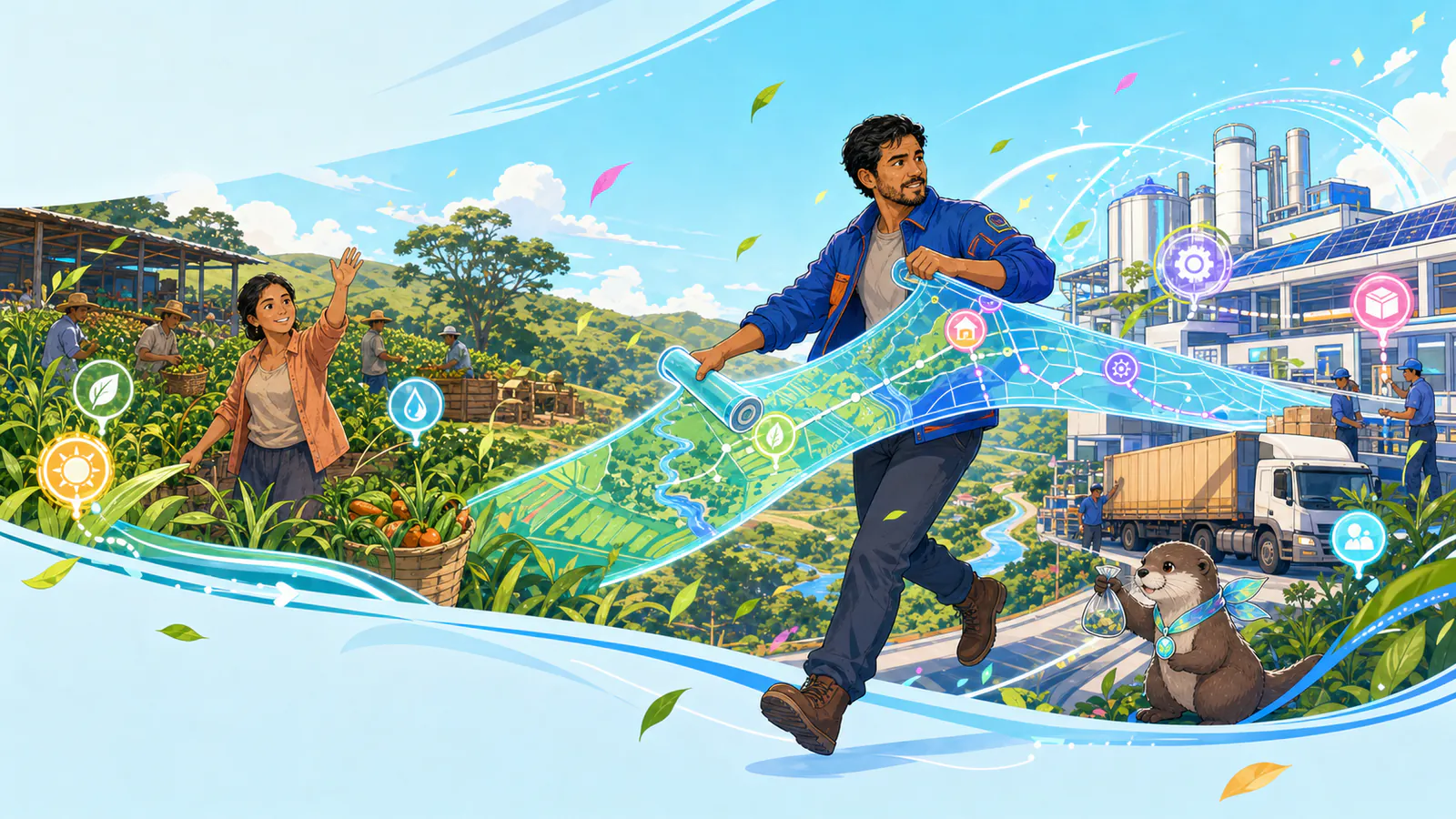
Dropping a high-impact sourcing region can simply move the problem to another supplier or place. Choose contract continuity, improvement support, and switching conditions, then learn how supplier information and unforeseen costs can be handled to produce a genuine transition.
3 scenes · about 4–6 min · storyUse supplier information and unforeseen transition costs to design improvement rather than exclusion.
 Game 06Rich editionCapital & riskBiodiversity outcome bondTransferable across regions
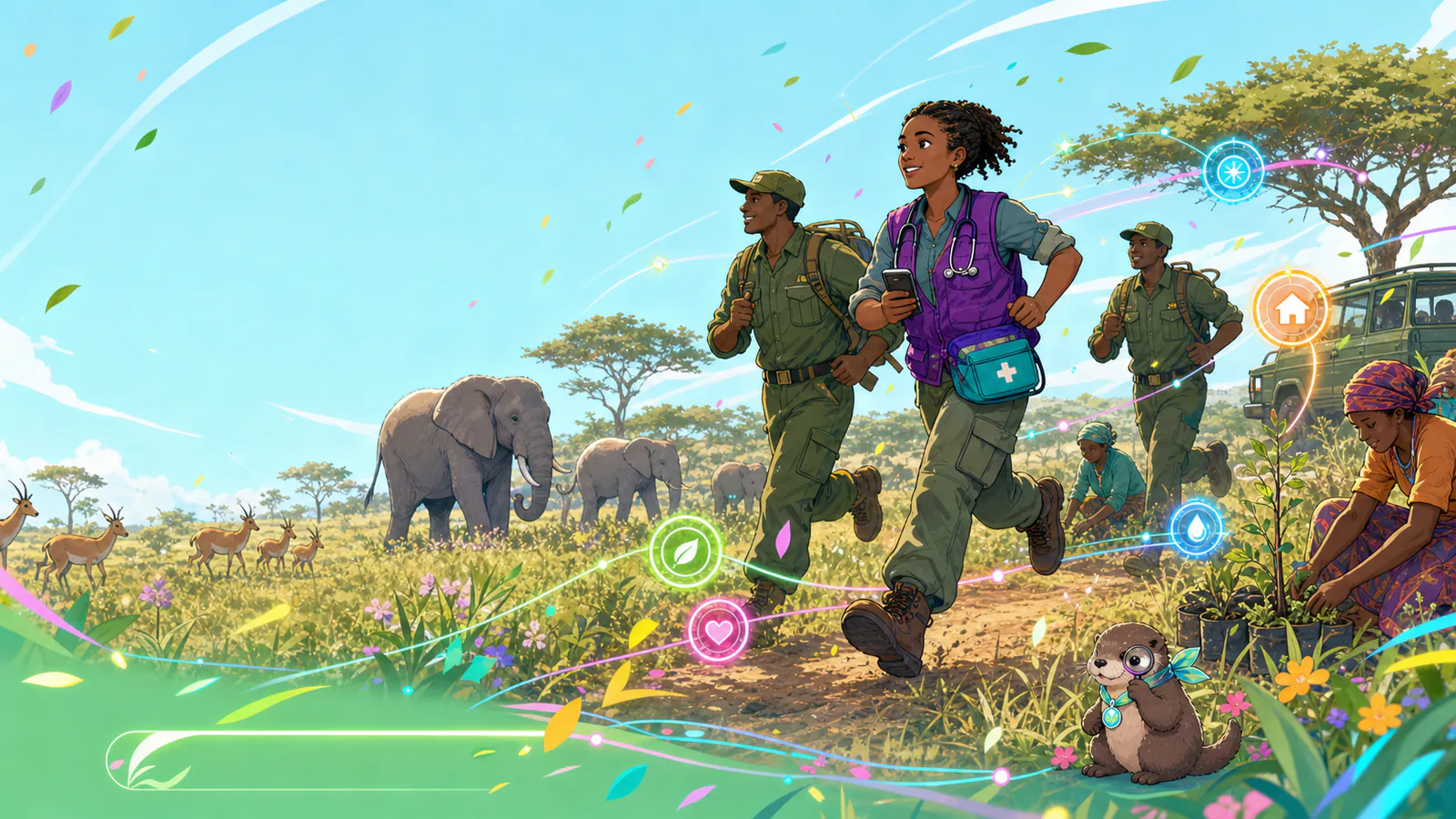
Wildlife recovery may take years, but ranger salaries and seedlings must be funded now. Allocate a limited MRV budget and choose upfront and verified outcome payments, learning how to keep work moving while protecting evidence quality and community rights.
4 decisions · about 8 min · richChoose outcome signals under a limited MRV budget and separate upfront finance from verified rewards.
 Game 07Rich editionLand & waterForest resilience benefit contractTransferable across regions
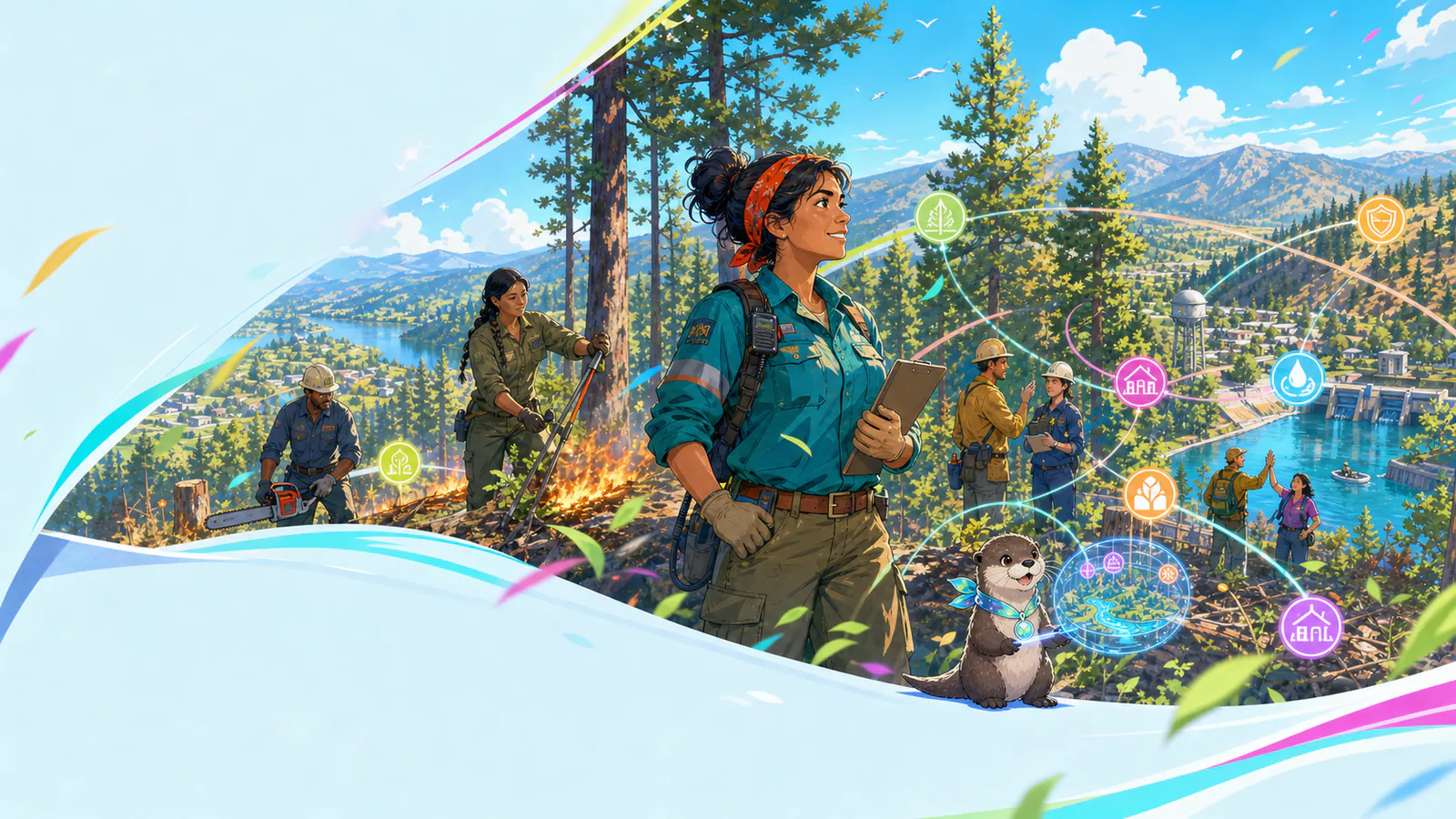
Forest work that prevents wildfire becomes hardest to justify in years when no fire occurs. Choose tail-risk limits, prevention investment, payers, and timing, then learn to build staged, robust finance without mistaking avoided loss for available cash.
4 decisions · about 8 min · richMove tail fire risk, capital limits, and staged investment together to find a more robust design.
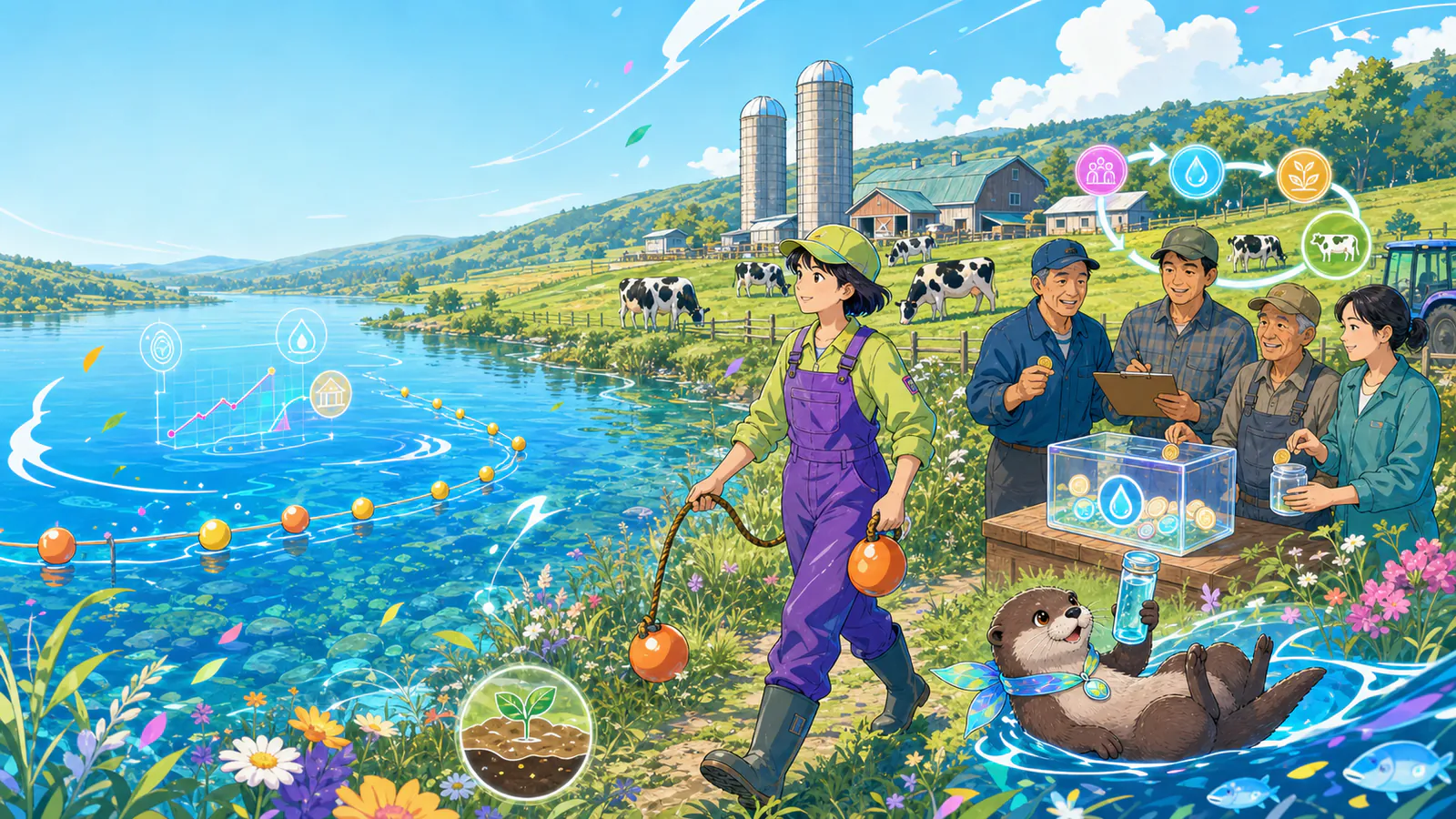 Game 08Quick decisionLand & waterWatershed nitrogen cap-and-tradeTransferable across regions
In a market designed to reduce watershed nitrogen pollution, set the ecological cap before allowing prices to operate. Choose the initial allowance allocation, monitoring, and local rules, and learn why an efficient market does not automatically protect safety or fairness.
3 scenes · about 4–6 min · storySet the ecological cap before price, then test allowance allocation and local rules.
 Game 09Rich editionIndustryDevelopment & biodiversity gain marketTransferable across regions
Where irreplaceable habitat remains on a housing site, decide in order whether to avoid impact, improve habitat on site, or buy units elsewhere. Learn to contract for time lags, failure risk, connectivity, and 30-year stewardship instead of trading by area alone.
4 decisions · about 8 min · richKeep irreplaceable habitat outside trading and design long-term stewardship and repair authority.
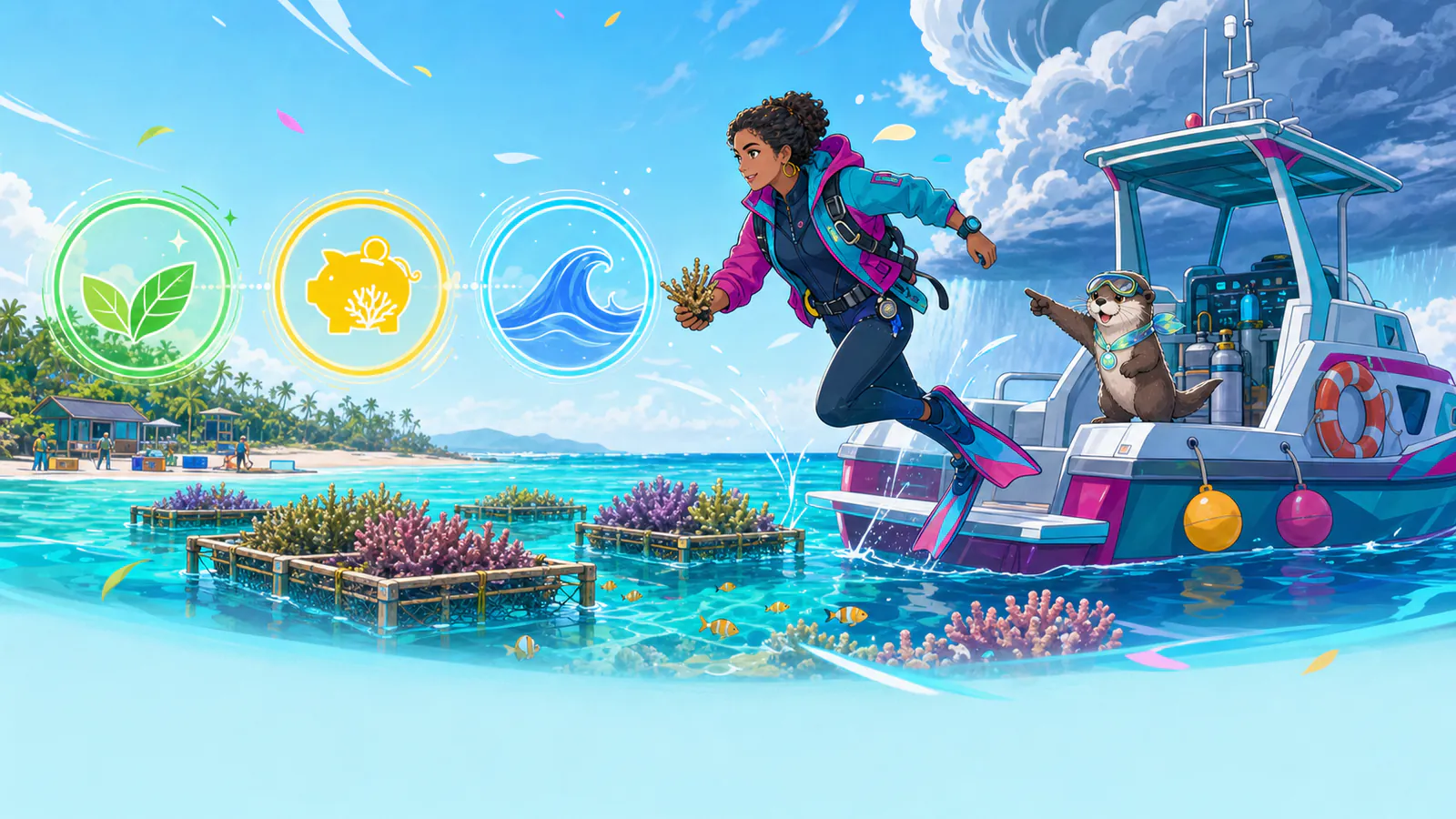 Game 10Quick decisionCapital & riskNature-capital parametric insuranceTransferable across regions
For a community that needs reef-restoration funds immediately after a storm, choose the wind trigger, cover, observation effort, and preparedness capital. Examine basis risk between the index and actual damage, then design insurance together with prevention before disaster.
3 scenes · about 4–6 min · storyMove the trigger, observation effort, and reserve capital to experience basis risk.
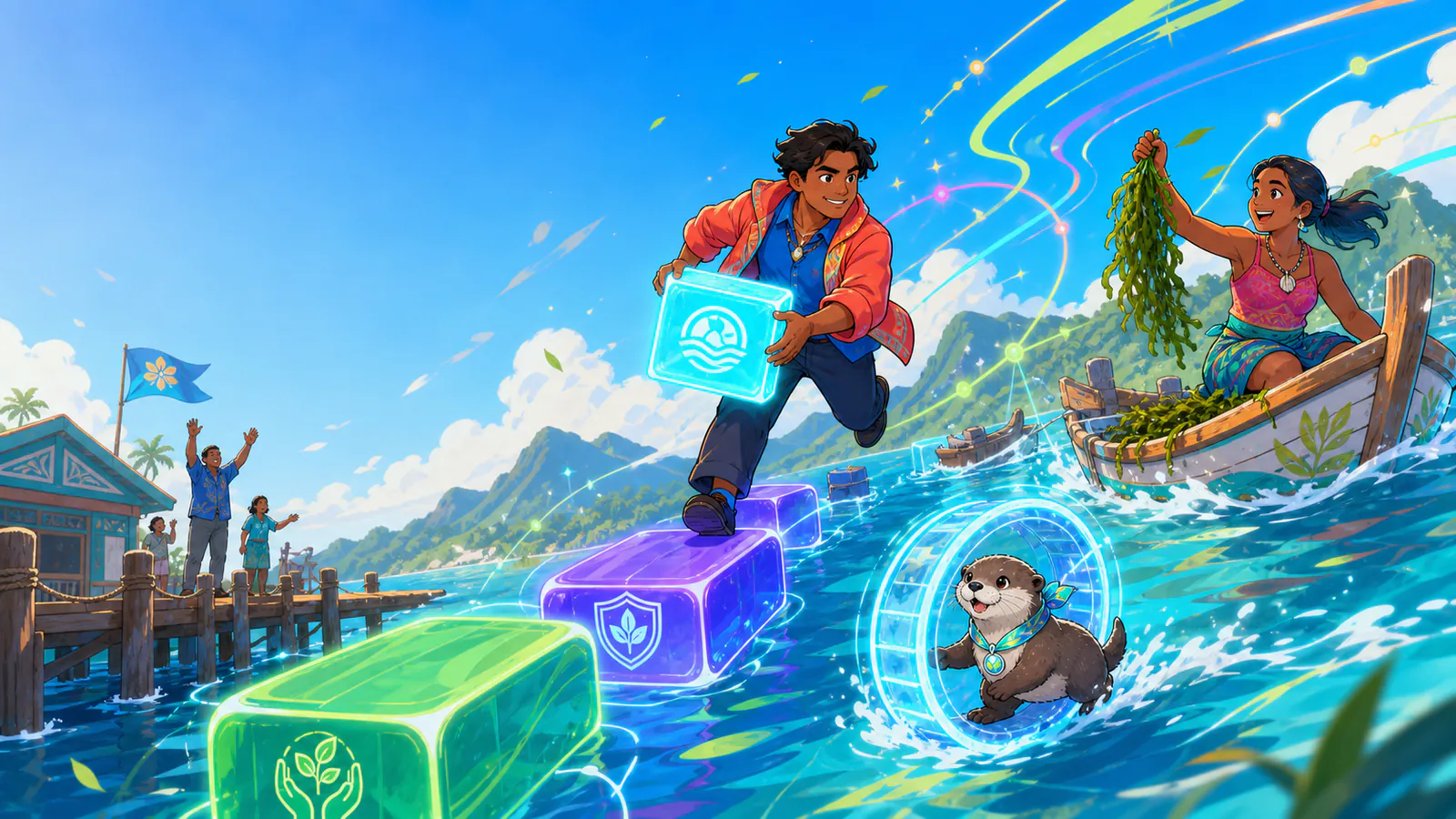 Game 11Quick decisionCapital & riskSovereign blue-finance stackTransferable across regions
Raising substantial capital for ocean conservation does not ensure that local projects receive it or deliver results. Assign roles and allocations across grants, guarantees, bonds, and local loans, separating money raised from money deployed while building a coalition that stays together.
3 scenes · about 4–6 min · storyCombine grants, guarantees, bonds, and local lending into a coalition that participants will not leave.
 Game 12Quick decisionLand & waterFarmland biodiversity results paymentsTransferable across regions
Design biodiversity results payments for farmland where weather shifts outcomes and measurement is imperfect. Choose indicators, payment timing, and a minimum participation payment, learning how to protect farmer choice and income without transferring weather and measurement risk to them.
3 scenes · about 4–6 min · storyChoose outcome signals and minimum participation payments without shifting measurement and weather risk to farmers.
Learn from real places
Use six regional contexts to connect nature, insurance, safety checks, and economics. The forest game adds a 20-year operating simulation.
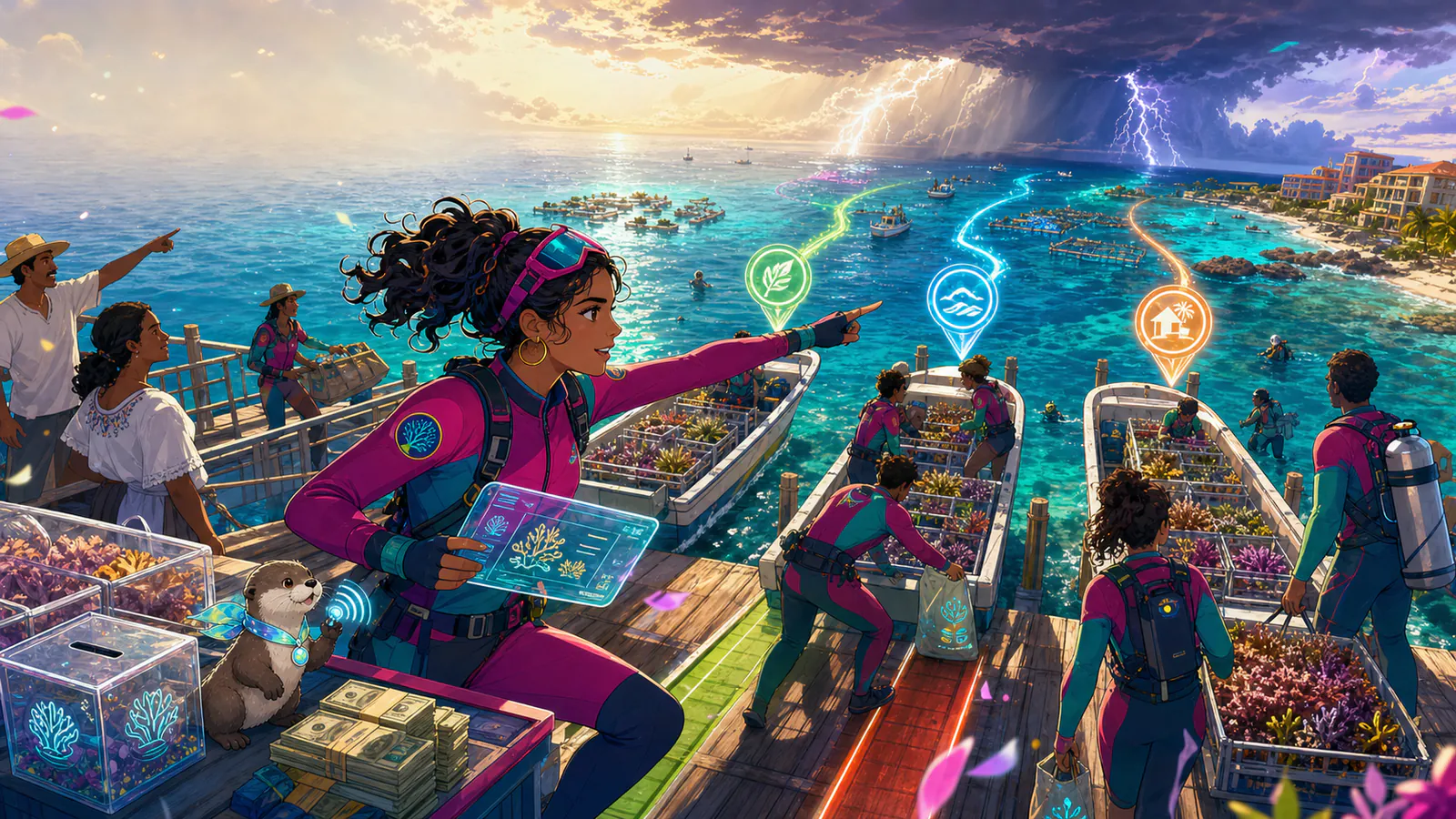 Region 014 questionsCoral reef × resilienceQuintana Roo / Mesoamerican Reef, MexicoCaribbean coast of Mexico
In Quintana Roo, where reef repair must begin immediately after a hurricane, compare a wind-speed trigger, a shared fund, and prevention investment. Judge speed against mismatch with actual loss, and learn the preparedness and funding scale a local response team needs.
4 themes · 3–15 minCompare hurricane triggers with actual reef loss and judge the trade-off between speed and mismatch.
 Region 024 questionsCoral reef × island networkHawai‘i coral reef insuranceEight main Hawaiian Islands
To protect reefs spread across several islands, decide how residents, tourism businesses, and government should share costs. Choose the scale of a shared fund and insurance plus monitoring rules, learning how cooperation can endure when benefits cross island boundaries.
4 themes · 3–15 minTrace benefits across islands and actors, then build a stable coalition and shared rules.
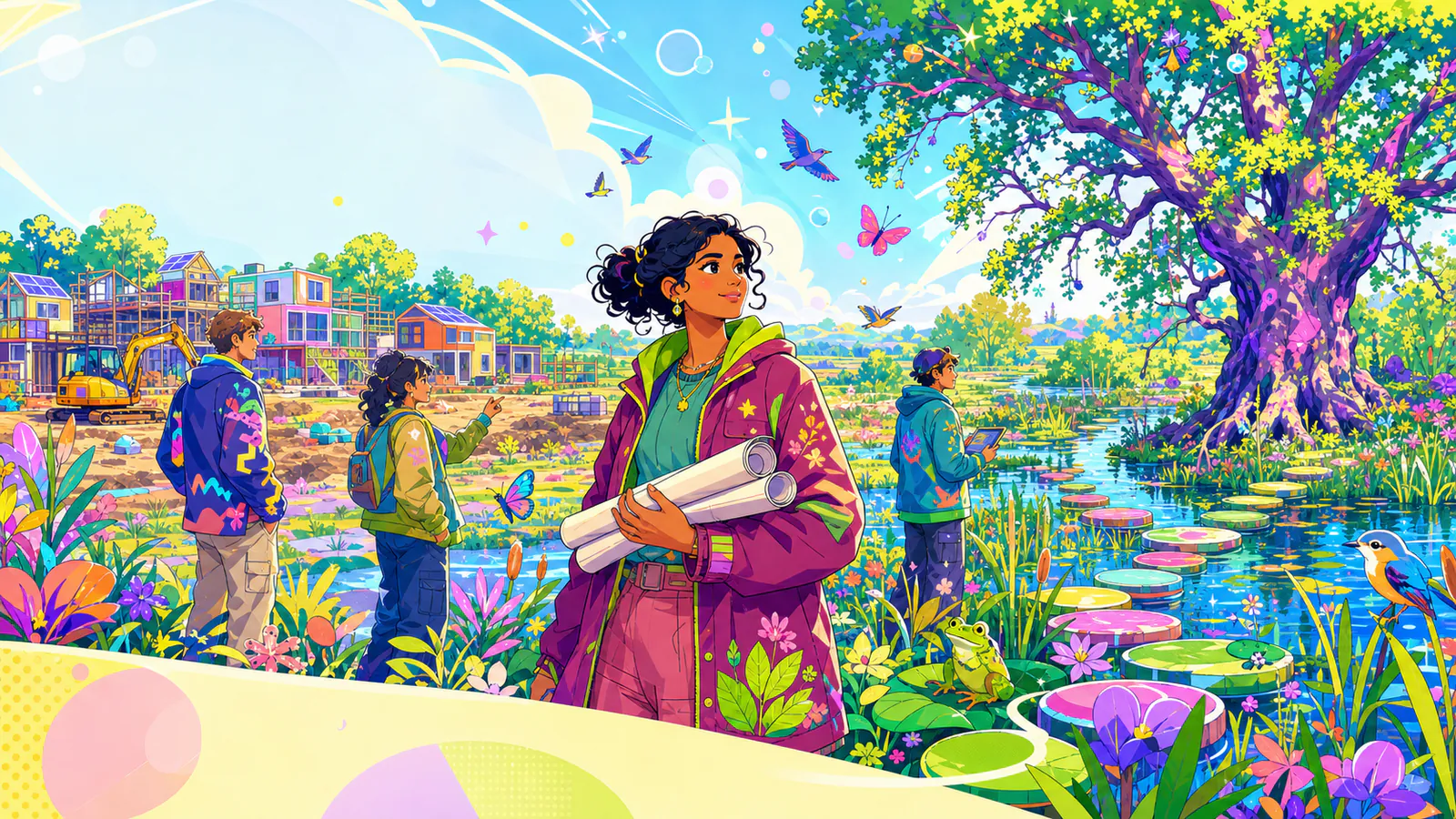 Region 034 questionsWetland × floodGrow a wetland as the town’s spongeRivers, marshes, and floodplains
Wetlands that reduce flooding take time to recover even with continued care. Compare small-scale observation, a community fund, and full risk finance, then judge how to learn and expand in stages while maintaining the ecological floor that protects the town.
4 themes · 3–15 minStart small under wetland recovery lags while preserving a safety floor and future expansion options.
 Region 044 questionsForest × fire and waterKeep forest care funded between crisesForests, satoyama, and headwaters
Forest care protects against fire and safeguards water, yet funding and cooperation often fade in quiet years. Choose prevention spending, a community fund, and insurance, then operate for twenty years to learn rules that handle renegotiation and exit without losing trust.
4 themes · 3–15 min · 20-year run: 15–25 minChoose cooperation, exit, and renegotiation over twenty years as trust and forest condition reshape strategy.
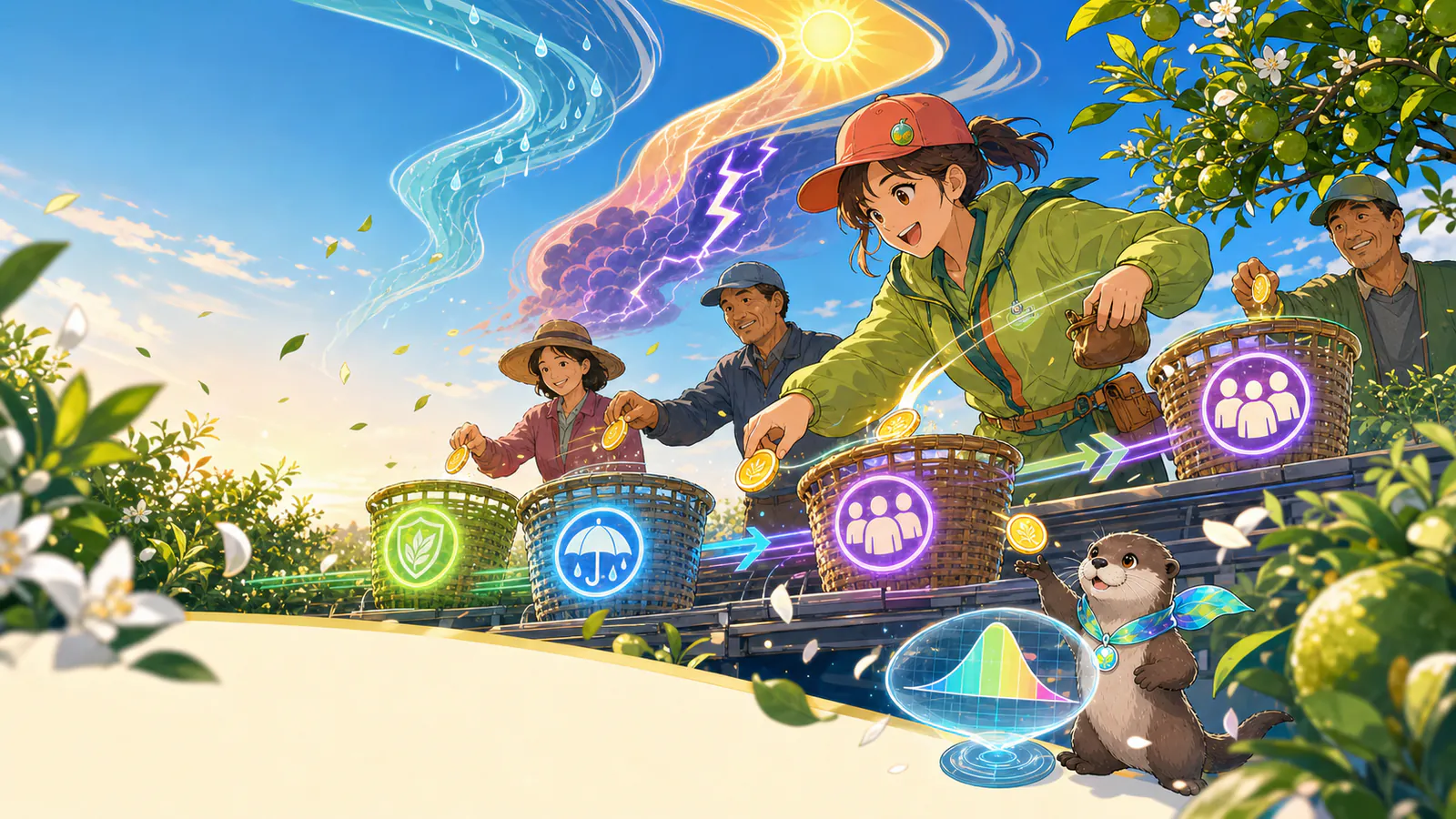 Region 054 questionsAgriculture × income swingsBuild a bridge between rain and harvestFarms, orchards, and food regions
On farms with unstable rainfall and harvests, compare shared weather data, a pooled reserve, and index insurance. Choose participation terms, observation signals, and payment timing, learning how livelihoods and nature recovery can continue when the weather departs from expectations.
4 themes · 3–15 minChange participation terms, payment timing, and signals to see who joins and whether outcomes persist.
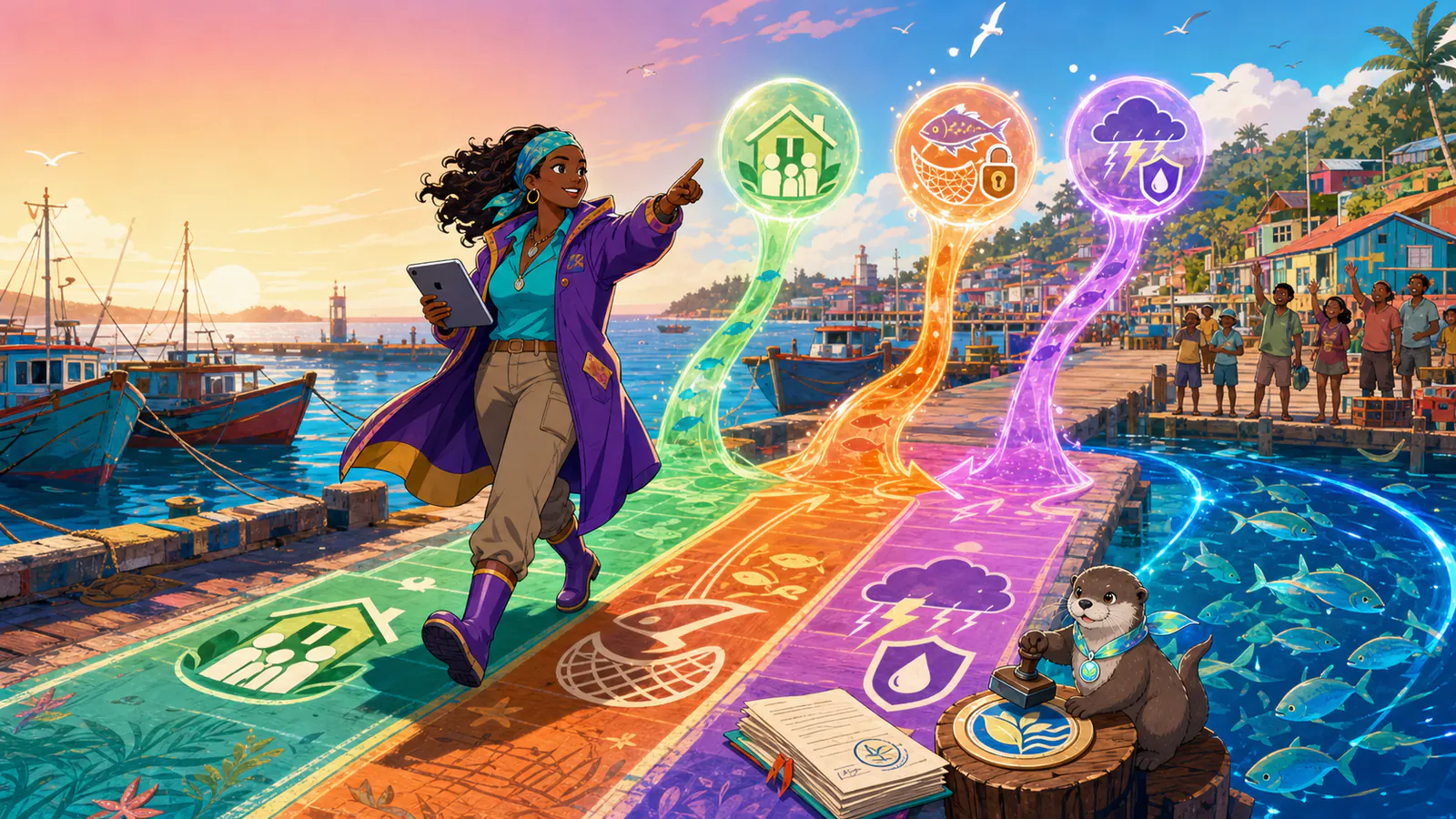 Region 064 questionsOcean & fisheries × livelihoodsBack the days when boats cannot go outCaribbean coastal communities
In a coastal community where storms and closures keep boats ashore, compare shared supplies, a local fund, and rapid finance. Choose fishing boundaries, monitoring, and payment rules, learning how cooperation can continue while fish stocks and livelihoods recover together.
4 themes · 3–15 minChoose boundaries, monitoring, and a local fund, then observe how repeated use and connectivity change cooperation.